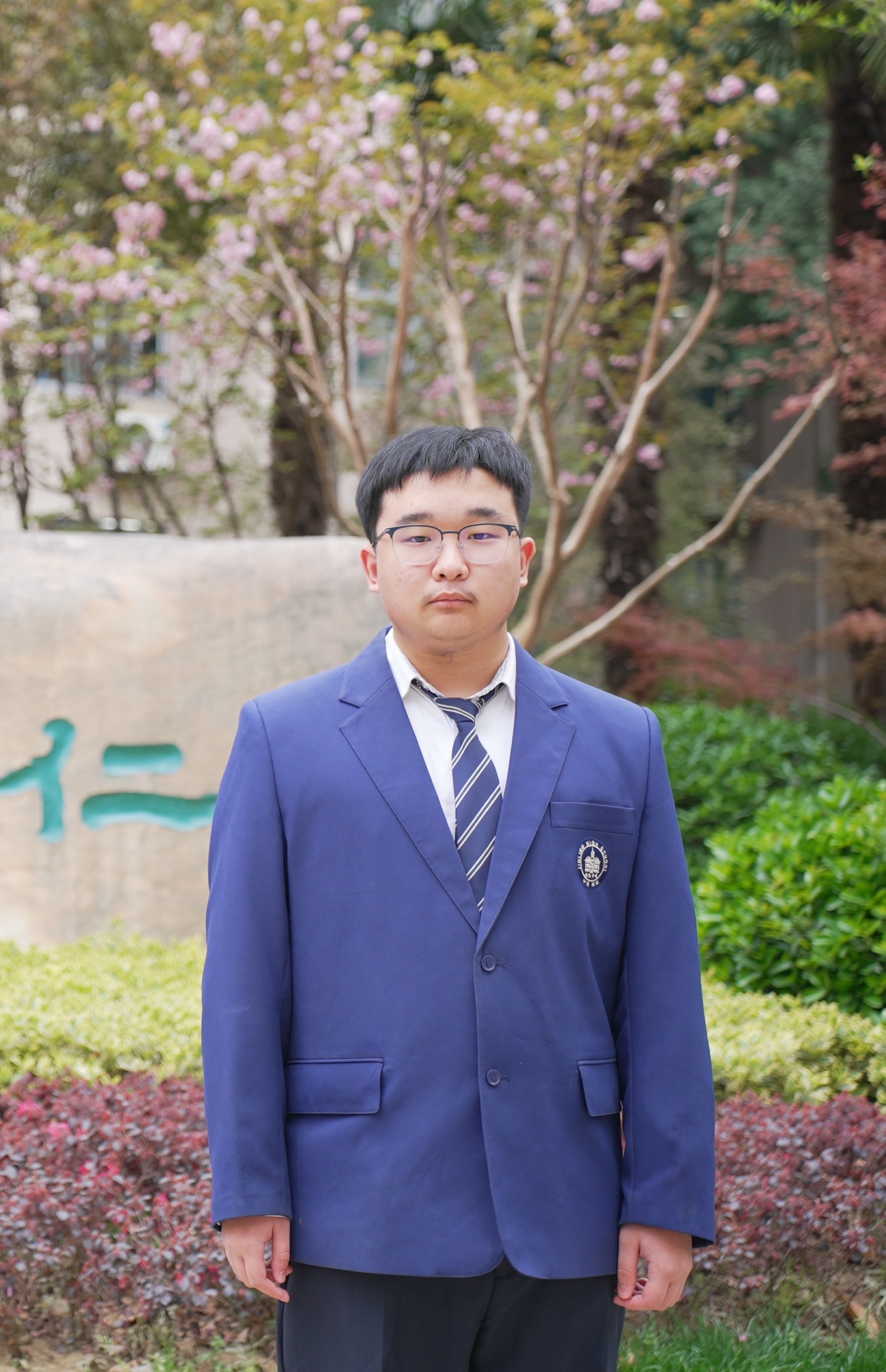
Zongwei (Tom) Tang

|

Data Science @ UC Berkeley · Backend, APIs & Full-Stack Development

About Me

Zongwei Tang

I am a Data Science student at UC Berkeley, focused on backend and full-stack software engineering — REST APIs, asynchronous job processing, and deployment. Open to connecting with those who share similar academic interests.

Education

UC Berkeley 2025 — 2029

B.A. Data Science · GPA: 4.0

Experience

IPMD, Inc. Aug. 2026 — Present

Full Stack Developer Intern

  • Automated post-session emotion analysis by building REST APIs that launch long-running inference jobs, track queued/running/failed/completed states, and return generated clinical reports without blocking user requests
  • Reduced duplicate emotion-analysis jobs by implementing session-level idempotency keys, exponential-backoff retries, and request timeouts
  • Built report-generation logic to aggregate model outputs into structured session results, validating malformed and incomplete inference responses before exposing them to the clinical application

Projects

Professor Research Profiler May 2026 — Jul. 2026

React, FastAPI, Redis, Turso, Docker

  • Full-stack research profiling app for PhD applicants, using the Semantic Scholar API to analyze professors' top-cited papers, publication trends, and frequent collaborators
  • Moved long-running Semantic Scholar and LLM analysis into asynchronous background jobs with status polling, preventing request timeouts during multi-step report generation
  • Built a multi-provider LLM router with token-bucket rate limiting, circuit-breaker failover, and background health checks to automatically route around unavailable providers
  • Designed the data layer with SQLAlchemy, Turso, and Redis cache-aside invalidation, supporting professor, paper, and per-user search history
  • Deployed with Docker Compose on a VPS, using Caddy as a reverse proxy and Cloudflare DNS-01 for automatic TLS certificate provisioning
Worldcraft Sep. 2025 — Dec. 2025

OpenProject Club, UC Berkeley · NeRF, Open3D, NumPy, FastAPI, Plotly

  • Built a pipeline converting real-world scenes into playable Minecraft worlds using NeRF, semantic segmentation, voxelization, and block conversion; owned the voxelization stage end-to-end
  • Converted PLY point clouds with Open3D and NumPy, mapping 3D points to voxel grids, averaging per-voxel RGB, and resolving conflicting semantic labels by point density
  • Deployed voxelization as a FastAPI microservice with endpoints for compressed NumPy output and interactive Plotly 3D visualization

Contact